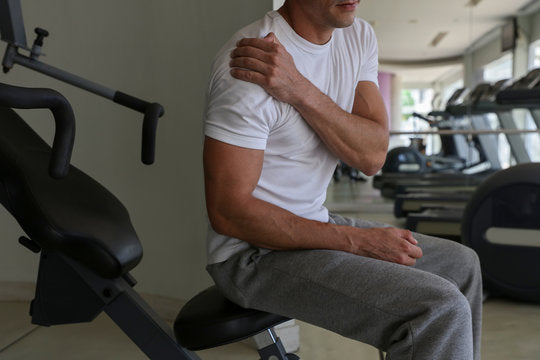

Rotator cuff tears are a common cause of shoulder pain and weakness, especially in middle-aged and older individuals. Here, we'll go through what a rotator cuff tear entails, what symptoms you should be aware of, and how you can relieve and support your shoulder in everyday life.
What is a rotator cuff tear?
A rotator cuff tear means that one or more of the tendons in the rotator cuff have ruptured completely or partially. The rotator cuff consists of four muscles that stabilize the shoulder joint and enable movements such as lifting and rotating the arm. A rupture impairs both strength and control in the shoulder, which often leads to pain and reduced function.
Common causes & risk factors
Rotator cuff tears can occur either acutely or gradually. A sudden injury can happen during a fall or heavy lifting, while prolonged overuse and age-related changes in the tendons are common causes of degenerative tears.
Risk factors include repetitive movements above shoulder height, working with arms in strenuous positions, and sports involving throwing or rapid arm movements. With increasing age, the tendons' strength decreases, which increases the risk of injury.
Symptoms
Common symptoms include shoulder pain, especially when lifting or rotating the arm. Many also experience noticeable weakness, such as difficulty lifting the arm out to the side or overhead.
The pain can be persistent and worsen at night, making it difficult to sleep on the affected side. In larger tears, there may also be a clear functional impairment where certain movements can no longer be fully performed.
When should you seek medical care?
You should seek medical care if you experience severe pain, clear weakness in the shoulder, or if you cannot lift your arm normally after an injury. This is especially true if the problems occurred suddenly.
For chronic problems or gradual worsening, it is also important to get an assessment, as untreated tears can lead to further functional impairment and affect shoulder stability.
Recommended protection & support
A shoulder brace can provide compression and warmth, which can have a pain-relieving effect and give a feeling of stability. However, a brace never replaces rehabilitation but should be seen as a complement to rehab training and, in some cases, adjustment of the work environment.
Rehabilitation often focuses on strengthening remaining muscle function, improving scapular stability, and optimizing movement patterns. Adjusting load and avoiding painful movements are important parts of recovery.
See our products that can help with rotator cuff tears
Related injuries
For more knowledge about shoulder problems, you can find more articles in the Shoulder Injury Guide, and you can also go to the Injury Guide main page to read about other injuries and symptoms.