Achilles tendonitis is a common overuse injury that affects the Achilles tendon, the strongest tendon in the body. The pain often arises in connection with increased training volume but can also develop with prolonged everyday strain.
What is Achilles Tendonitis?
Achilles tendonitis is a condition where the Achilles tendon becomes irritated and overloaded. The Achilles tendon connects the calf muscles to the heel bone and is crucial for movements such as walking, running, and jumping.
When the load on the tendon becomes greater than what the tissue can handle, small micro-injuries can occur. This leads to pain, stiffness, and sometimes swelling in the area. The problems usually arise in the middle of the tendon but can also be located at the insertion point near the heel bone.
Physiotherapist's tips for Achilles Tendonitis
"For Achilles tendonitis, a heel lift can help relieve strain on the Achilles tendon and reduce symptoms. Also adjust the load and, if needed, combine this with rehabilitation exercises tailored to your symptoms."
Ida
Licensed Physiotherapist · Rehaboteket
Symptoms
- Local pain and tenderness along the Achilles tendon
- Stiffness and start-up problems, especially in the morning
- Swelling around the tendon, sometimes with redness and warmth
- Pain that increases with exertion
- Creaking sensation or sound with movement
- Resting pain with prolonged inflammation
Symptoms of Achilles tendonitis often arise when the Achilles tendon is repeatedly stressed.
When does Achilles tendonitis hurt the most?
Pain from Achilles tendonitis often arises when the Achilles tendon is heavily or repeatedly stressed.
When taking the first steps in the morning
Many people experience stiffness and pain in the Achilles tendon when they start walking after a night's rest.
When running or jumping
Activities where the calf muscles work intensely can worsen the symptoms.
After physical activity
The pain may be more noticeable after exercise than during the activity itself.
When pressure is applied to the Achilles tendon
Some people experience tenderness when pressing along the tendon or when shoes rub against the area.
Common causes & risk factors
The most common cause of Achilles tendonitis is overuse. This can occur with a rapid increase in training volume, intense activity, or insufficient recovery.
Anatomical factors can also contribute. Overpronation in the foot causes the Achilles tendon to be stressed sideways, which can increase irritation. Inappropriate shoes, hard surfaces, and stiff calf muscles can also increase the risk.
When should you seek medical care?
If you experience persistent pain, difficulty bearing weight on the foot, or if the symptoms do not improve despite rest and reduced activity, medical care should be sought. It is especially important to get an assessment for long-term or recurring problems.
Recommended protection & support
For Achilles tendonitis, the right protection and support can help reduce pain and increase comfort in daily life and activity.
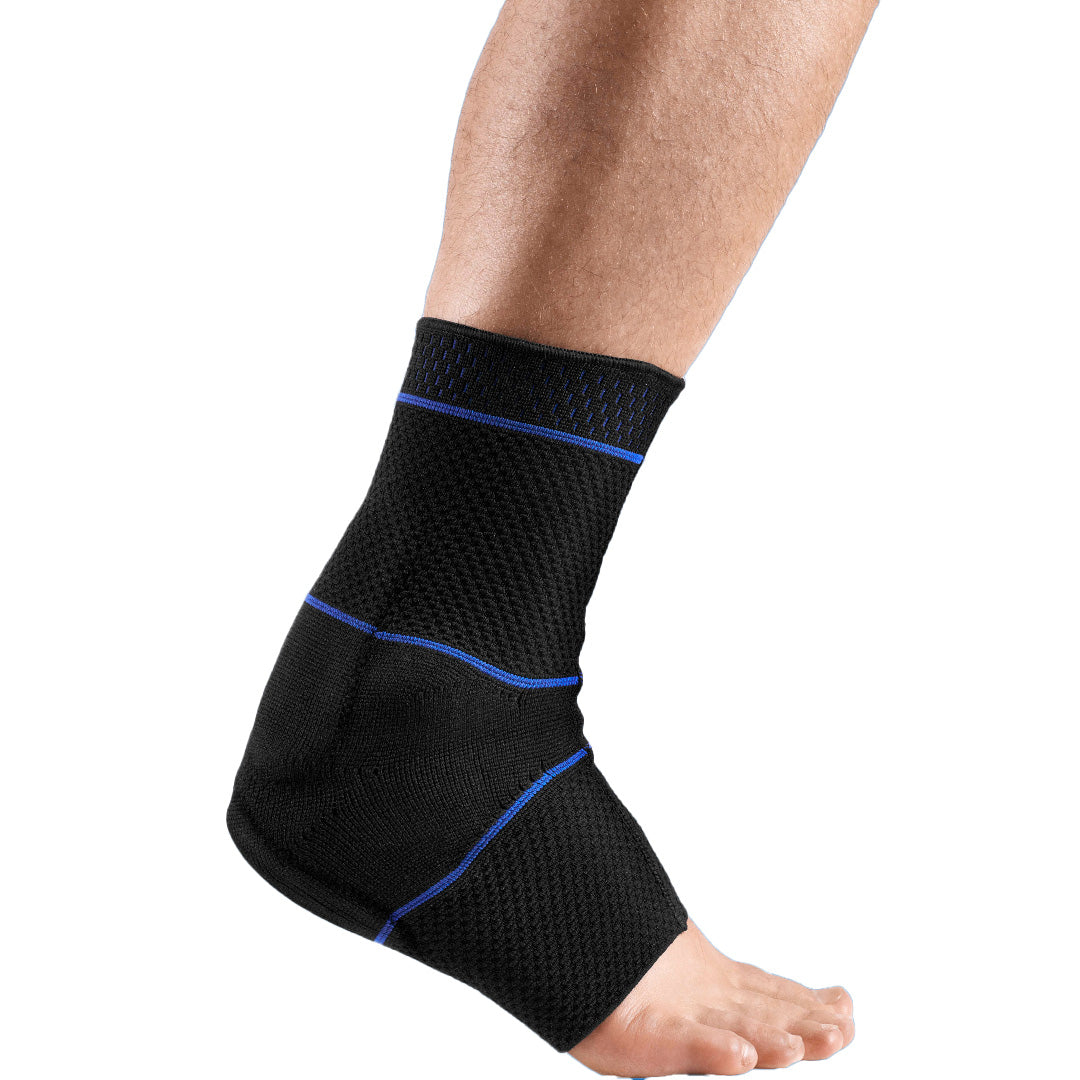
An Achilles tendon protector combines the relief of a heel wedge with compression, which can reduce swelling and provide support to the tendon. A pronation insole can help correct the foot's load and reduce side stress on the Achilles tendon. An Achilles heel wedge can also provide relief by reducing the tendon's range of motion.
Rehabilitation with individually adapted exercises from a physiotherapist is often an important part of the treatment as it strengthens the tendon and improves load capacity.
See all braces and supports that can provide relief for Achilles tendonitis
Related injuries
For more knowledge about the foot and heel, you can read more in the Foot & Heel Injury Guide. You can also go to the Injury Guide's main page to read about other injuries and symptoms.
The Injury Guide – quick guidance in case of complaints
In our Injury Guide, you will receive clear and easy-to-understand information about common injuries, how they occur, and what symptoms usually occur. You will also receive recommendations on which protection and aids can relieve your discomfort and help you further in your rehabilitation. All information is based on expert knowledge from our licensed physiotherapist.
Find the right protection for your needs
There are several ways to find the right product on our website. For a more personalized selection, you can use our filters and sort by injury, body part, or sport. You can also get help from our AI assistant Eir, who is trained on all the content on our website and can help you with product recommendations, fit questions, and order-related concerns – 24/7. If you would prefer to speak directly with our licensed physiotherapist you can contact us via email or phone for personalized advice and support in selecting your product.