Heel spur (plantar fasciitis)

Heel spur and plantar fasciitis are two names for the same type of problem and are one of the most common causes of heel pain in adults. The condition most often arises when the tendon plate under the foot, the plantar fascia's attachment to the heel bone, is overloaded for a long time. The pain can make it difficult to walk normally, especially after rest or in the morning.
What is heel spur (plantar fasciitis)?
Heel spur is a painful condition at the attachment point where the plantar fascia, the strong tendon plate under the foot, attaches to the heel bone. When the tissue is overloaded, irritation and small micro-injuries occur in the area, leading to pain under the heel.
Despite the name, it is usually not the bone outgrowth itself – the so-called spur – that causes the pain. Instead, in most cases, the problem is due to inflammation or irritation at the plantar fascia's attachment. The condition is therefore often called plantar fasciitis.
Physiotherapist's tips for heel spurs
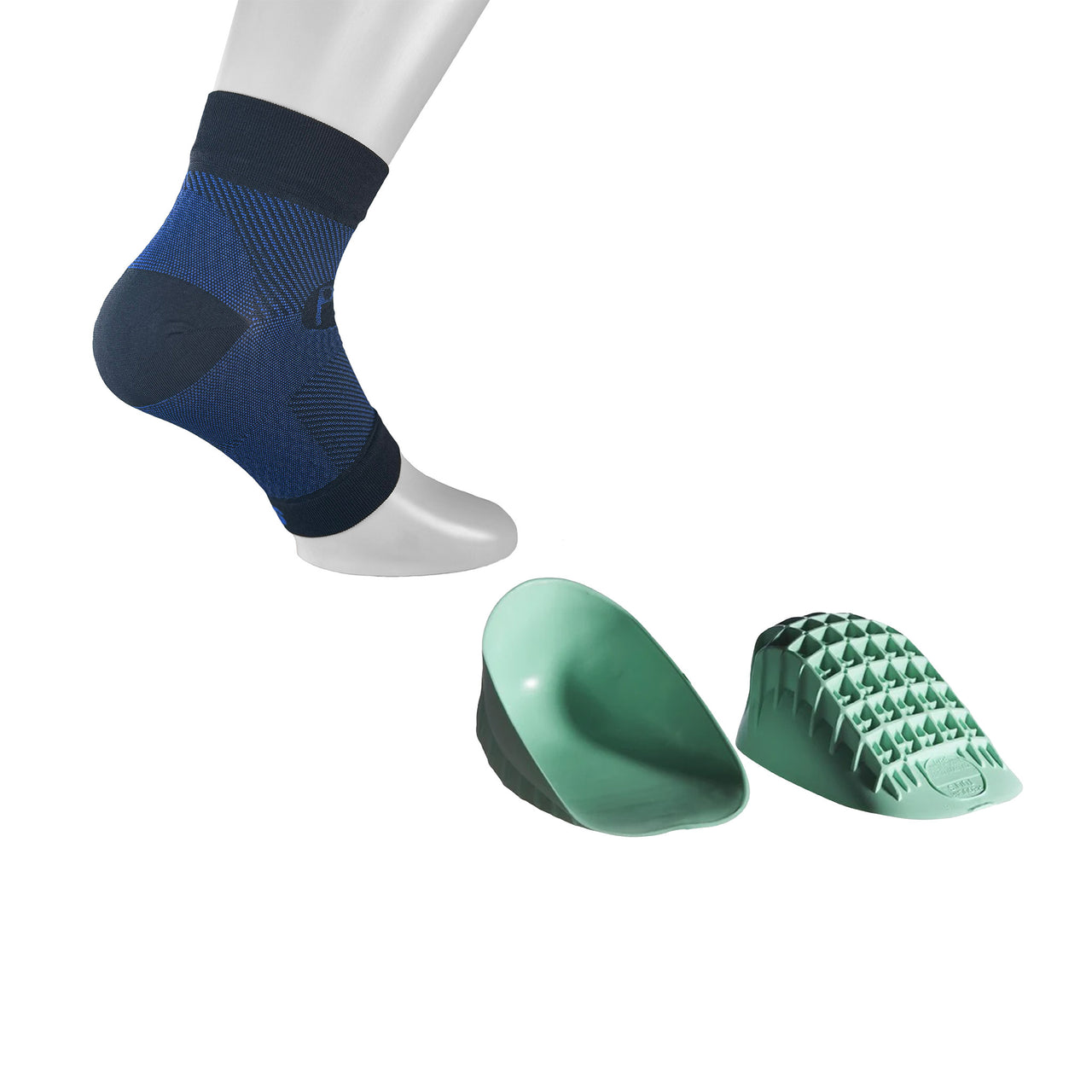
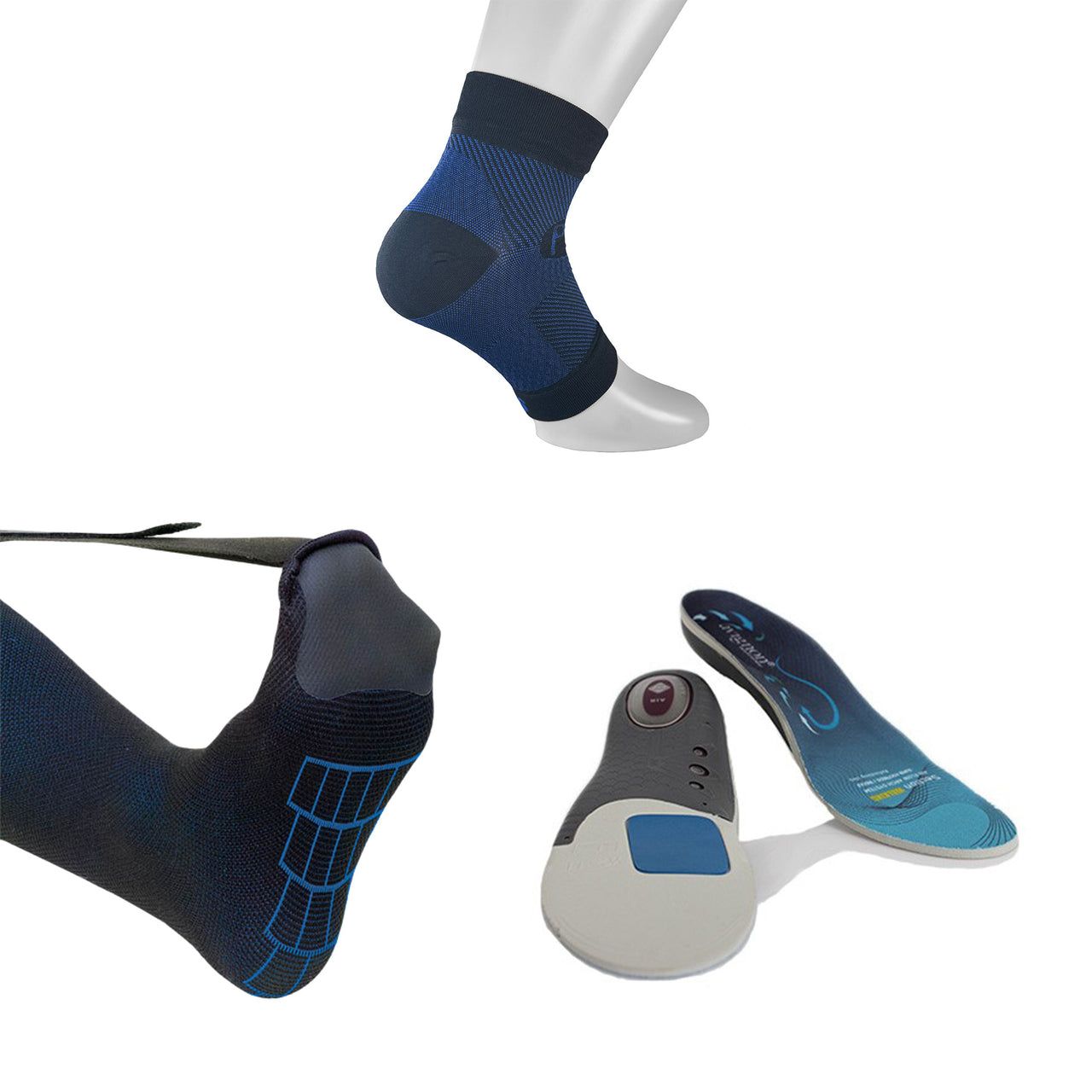
"For plantar fasciitis, a heel cup or pressure-relieving insole can help reduce pain under the heel. Combine this with roomy, shock-absorbing shoes, adjusted loading and exercises for the foot and calf. If the first steps in the morning are painful, a night splint that keeps the foot in a gently stretched position can be a useful addition."
Ida
Licensed Physiotherapist · Rehaboteket
Symptoms
- Pain on the inside or front of the heel, especially when starting to move
- Stiffness and intense first steps in the morning
- Difficulty walking or standing on tiptoes
- Pain that increases with load and decreases with rest
- Local swelling or redness
The symptoms of heel spur are often most noticeable in situations where the plantar fascia's attachment is stressed after rest or repeated impacts.
When does heel spur usually hurt the most?
The pain from heel spur often varies depending on when and how the foot is stressed. Many experience the discomfort most clearly in certain situations during the day.
First steps in the morning
One of the most typical signs of heel spur is severe pain during the first steps when you get out of bed. During the night, the plantar fascia shortens somewhat, and when the foot is stressed again, a pull occurs at the tendon attachment in the heel.
After sitting still for a long time
Pain can also occur when you start walking after sitting still for a long time, for example, after working at a desk or a long car journey.
During longer walks or prolonged standing
When the plantar fascia is stressed for a longer period, the pain can return and feel more like a dull or burning ache under the heel.
When walking barefoot on hard floors
Hard surfaces without shock absorption can increase pressure on the heel and make the pain more pronounced.
Common causes & risk factors
Heel spur usually develops gradually when the stress on the plantar fascia becomes greater than the tissue can handle. Common causes include prolonged walking or standing work, running on hard surfaces, and shoes with poor shock absorption.
Other factors that can increase the risk include fallen arches, tight calf muscles, being overweight, or a sudden increase in training volume. The condition is most common in people between 40 and 60 years old, but it can occur at any age.
When should you seek care?
For persistent pain under the heel that does not improve despite rest, better shoes, or self-care, you should contact healthcare for an assessment. The same applies if the pain becomes severe or affects your ability to walk normally.
Recommended protection & support
For heel spur, the right protection and relief can contribute to reduced pain and better comfort in everyday life. Aids such as heel cups, shock-absorbing insoles or arch supports can reduce the load on the plantar fascia's attachment. A night splint stretches the tendon atthe night and counteracts morning stiffness. Compression socks, such as PF8, provide support and reduce stress during activity.
By improving heel shock absorption and relieving the tendon plate under the foot, these aids can contribute to a softer load with every step. For many, the right support in combination with adapted activity can make a big difference to the pain.
See all protection and support that can relieve heel spur
Related injuries
The Injury Guide – quick guidance for common injuries
In our Injury Guide, you will receive clear and easy-to-understand information about common injuries, how they occur, and what symptoms usually occur. You will also receive recommendations on which protection and aids can relieve your discomfort and support your rehabilitation. All information is based on expert knowledge from our licensed physiotherapist.
Find the right protection for your needs
There are several ways to find the right product on our website. For a more personalized selection, you can use our filters and sort by injury, body part or sport. You can also get help from our AI assistant Eir, who is trained on all the content on our website and can help you with product recommendations, fit questions, and order-related concerns – 24/7. If you would prefer to speak directly with our licensed physiotherapist you can contact us via email or phone for personalized advice and support in selecting your product.