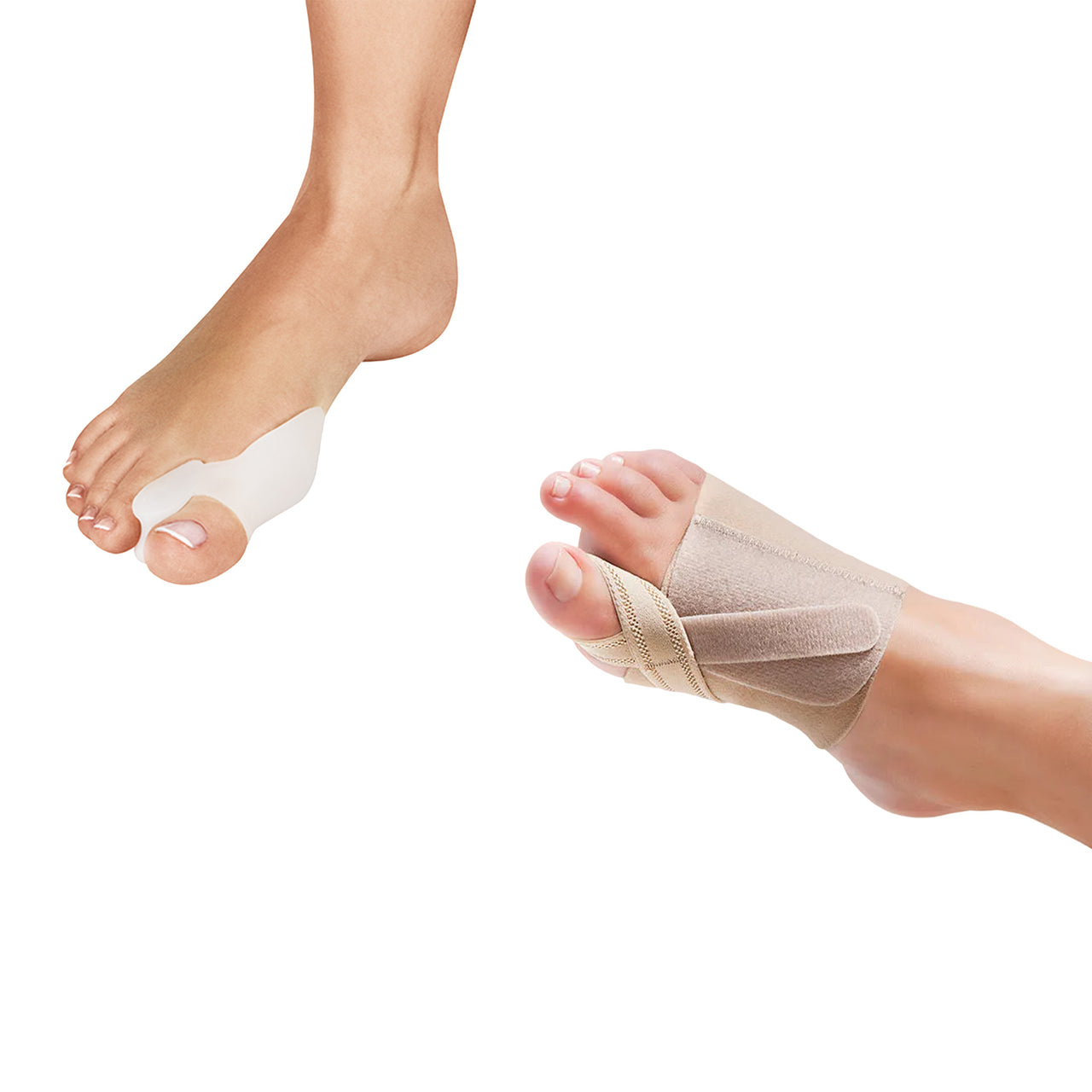
Hallux valgus means that the big toe is angled inwards towards the other toes, often with a prominent bump on the inside of the foot. The misalignment can cause pain, increased pressure, and difficulty finding shoes that do not cause discomfort.
What is hallux valgus?
Hallux valgus, also known as a bunion, is a common problem in the forefoot. A normal angle in the big toe joint is up to 10°, but when the angle becomes larger, both pressure between the toes and a prominent bony growth, the so-called bunion bump, often occur. The development often happens slowly over time and can affect both the big toe joint and the other toes.
Physiotherapist's tips for hallux valgus
"When it comes to hallux valgus, it's important to both reduce pressure on the big toe and provide support for a more natural position. I often recommend combining toe separators and protectors with corrective support and simple exercises for the best long-term effect."
Ida
Licensed Physiotherapist · Rehaboteket
Symptoms
- Big toe angled inward towards other toes
- Visible bump on the inside of the big toe joint
- Pain and redness from pressure from shoes
- Difficulty finding suitable shoes
- Pain from weight-bearing in the forefoot, and sometimes difficulty walking without discomfort
Common causes & risk factors
Hallux valgus can develop for several reasons. Heredity plays a major role, as the condition often runs in families. A fallen arch in the forefoot can increase pressure over the big toe joint, and overpronation leads to increased strain on the inside of the forefoot. Tight or hard shoes, especially high heels that shift the body's weight forward, also contribute to the risk. Over time, a long-term misalignment can gradually worsen and cause increased discomfort.
When should you seek medical attention?
If you have recurring pain, difficulty walking longer distances, or cannot find shoes that work without discomfort, you should contact healthcare for an assessment. In more severe cases, an orthopedist can assess the need for further treatment.
Recommended braces & supports
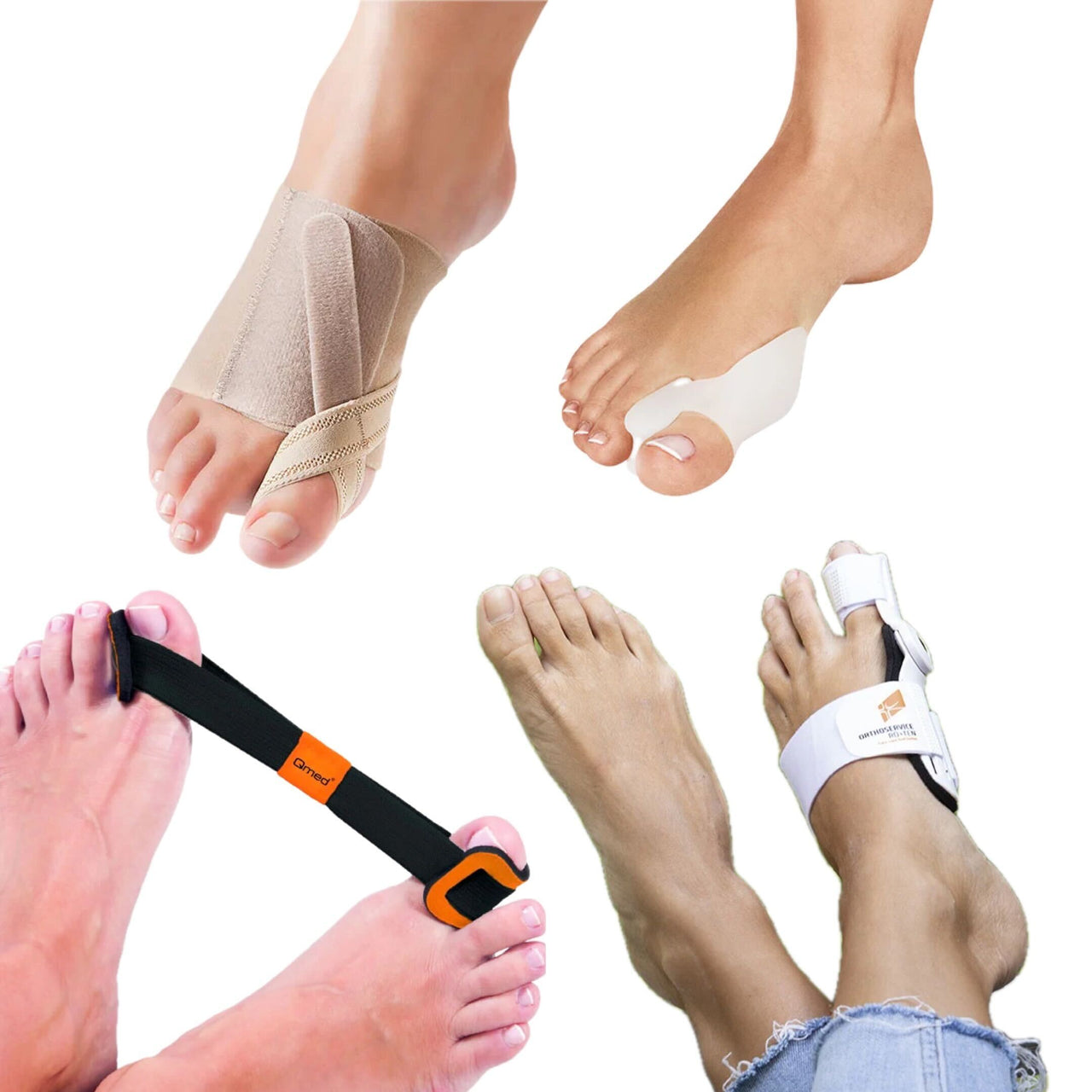
To relieve pressure and reduce strain from hallux valgus, there are several aids. For hallux valgus, the right protection and relief can contribute to reduced pain and increased comfort in everyday life and activities.
See all braces and supports that can relieve hallux valgus
Related injuries
For more knowledge about foot and heel, you can read further in the Foot & Heel Injury Guide. You can also go to the Injury Guide's main page to read about other injuries and symptoms.
About Skadeguiden – quick guidance in case of complaints
In our Injury Guide you will receive clear and easy-to-understand information about common injuries, how they occur and what symptoms usually occur. You will also receive recommendations on which protection and aids can relieve your discomfort and help you further in your rehabilitation. All information is based on expert knowledge from our licensed physiotherapist.
Find the right protection for your needs
There are several ways to find the right product on our website. For a more personalized selection, you can use our filters and sort by injury, body part or sport. You can also get help from our AI assistant Eir , who is trained on all the content on our website and can help you with product recommendations, fit questions and order-related concerns – 24/7. If you would prefer to speak directly with our licensed physiotherapist you can contact us via email or phone for personalized advice and support in selecting your product.