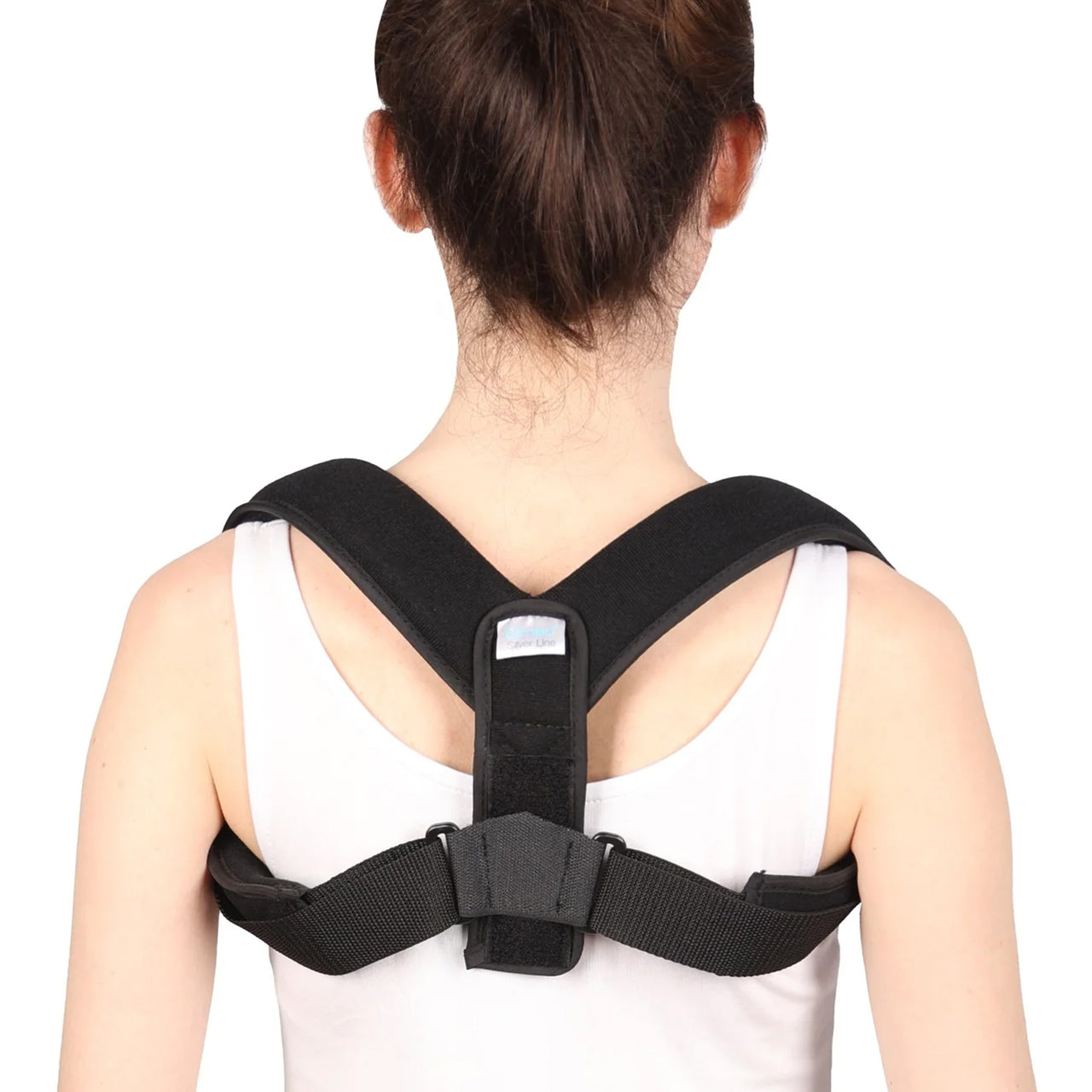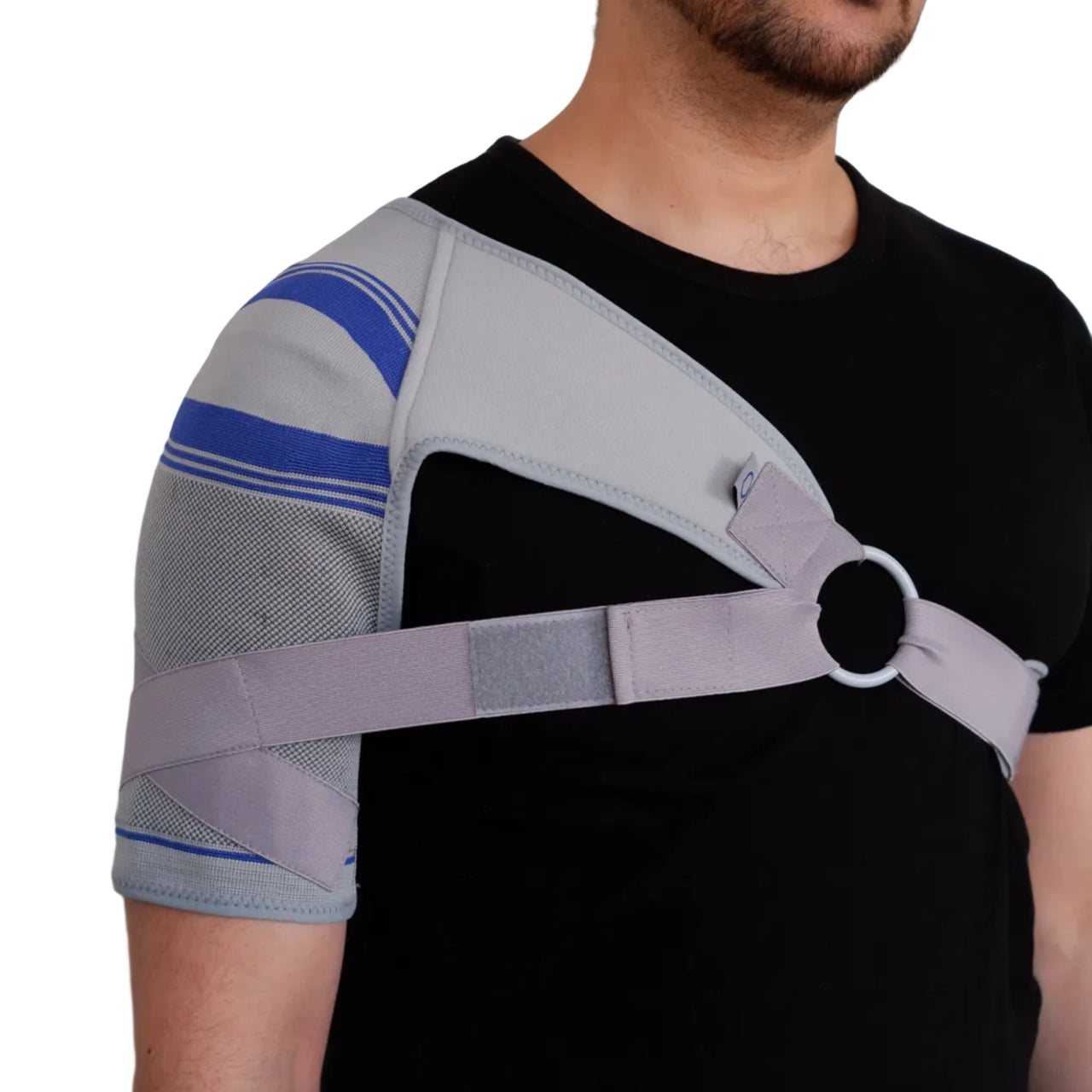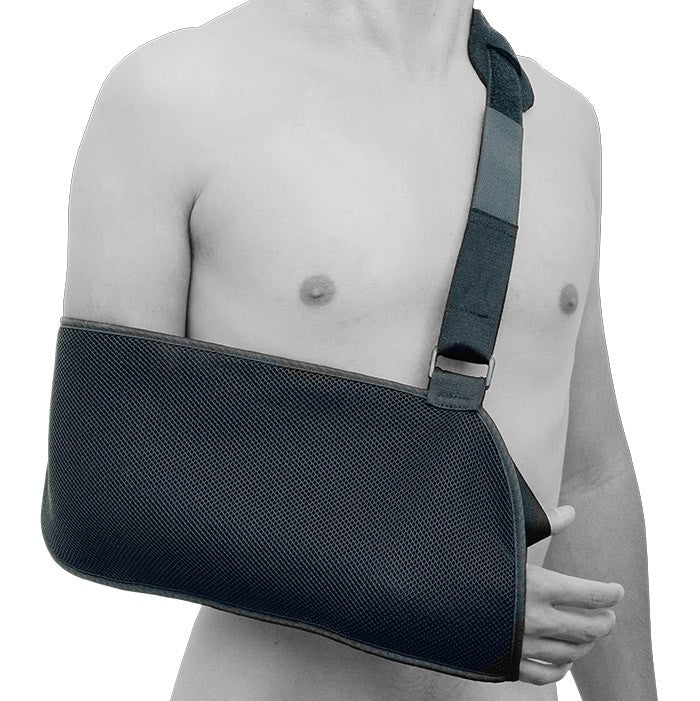

Ein Schulterbandage kann eine wertvolle Unterstützung sein, wenn Sie nach einer Verletzung oder Überlastung zurückkehren möchten. Richtig angewendet, kann sie Sicherheit bieten, Unbehagen reduzieren und Ihnen helfen, sich im Alltag weiter zu bewegen.
Wenn Sie mehr über Schulterschmerzen, Symptome und zugrunde liegende Ursachen erfahren möchten, empfehlen wir unseren Verletzungsratgeber zu Schulterproblemen.
So funktioniert eine Schulterbandage
Schulterbandagen kombinieren oft:
- Kompression, die Unbehagen reduzieren kann
- Wärme, die die Muskulatur flexibler macht
- leichte Stabilisierung, die schmerzhafte Extrempositionen einschränkt
Unterschiedliche Bedürfnisse – unterschiedliche Unterstützungsniveaus
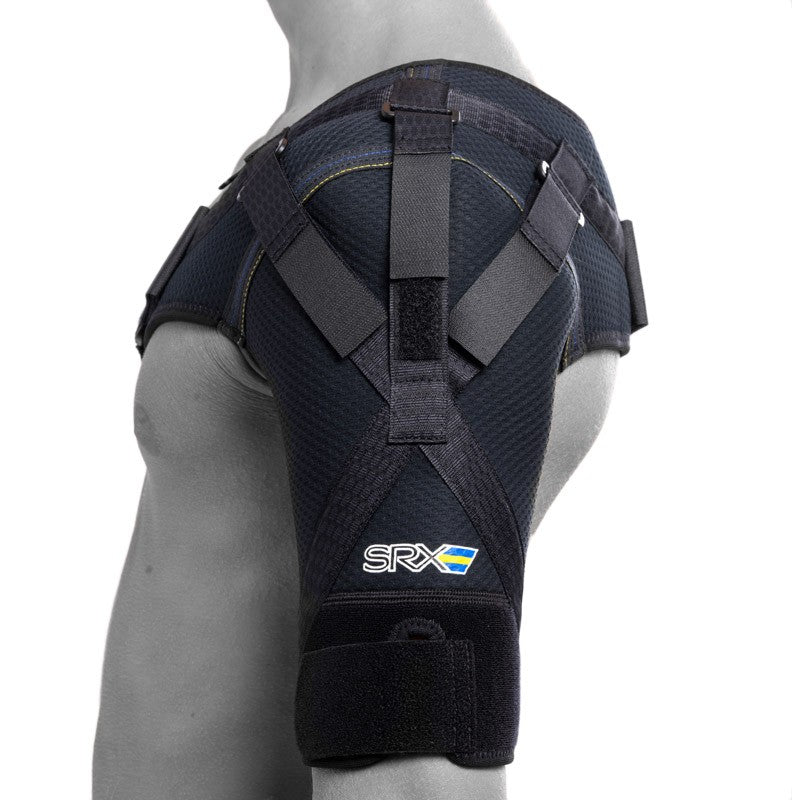
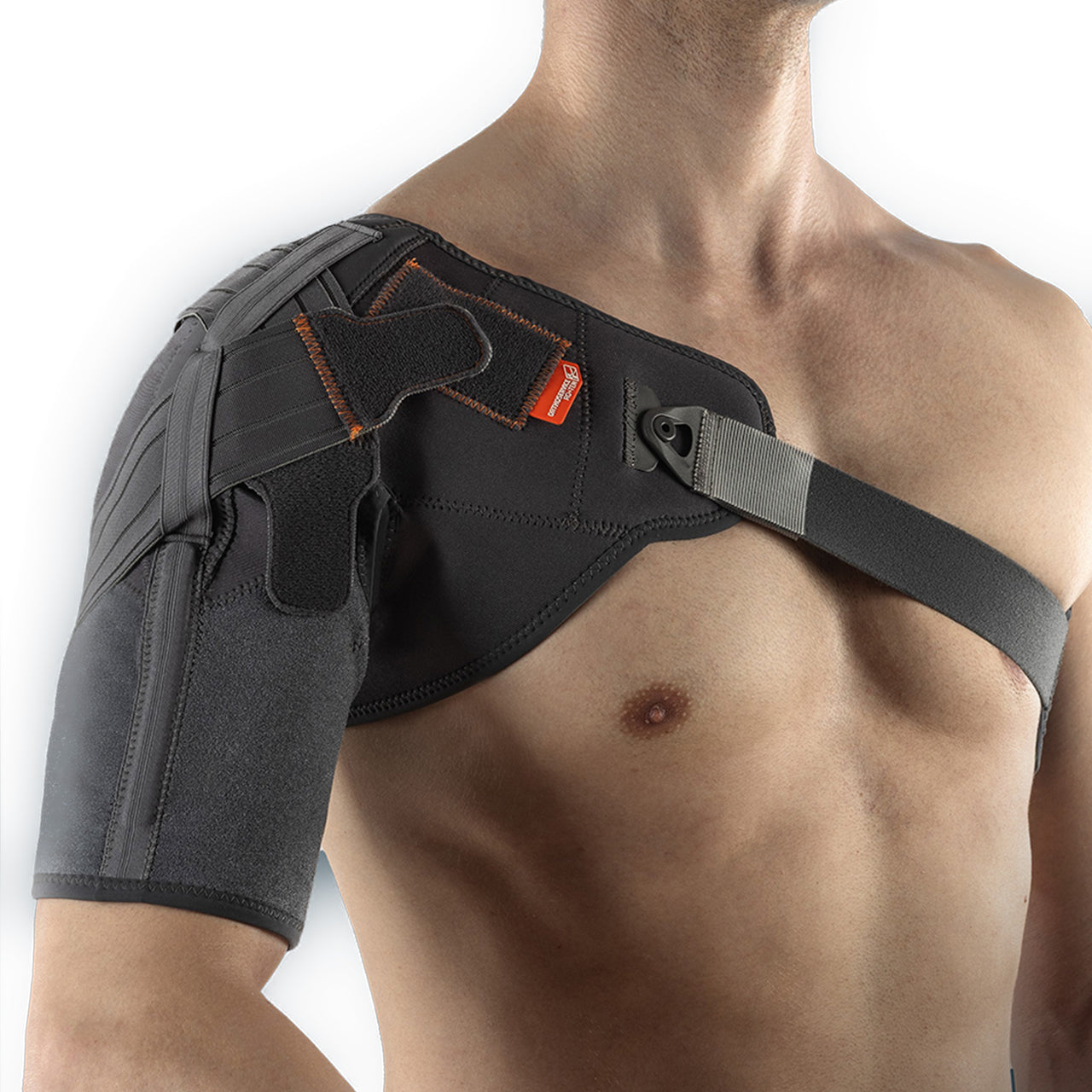
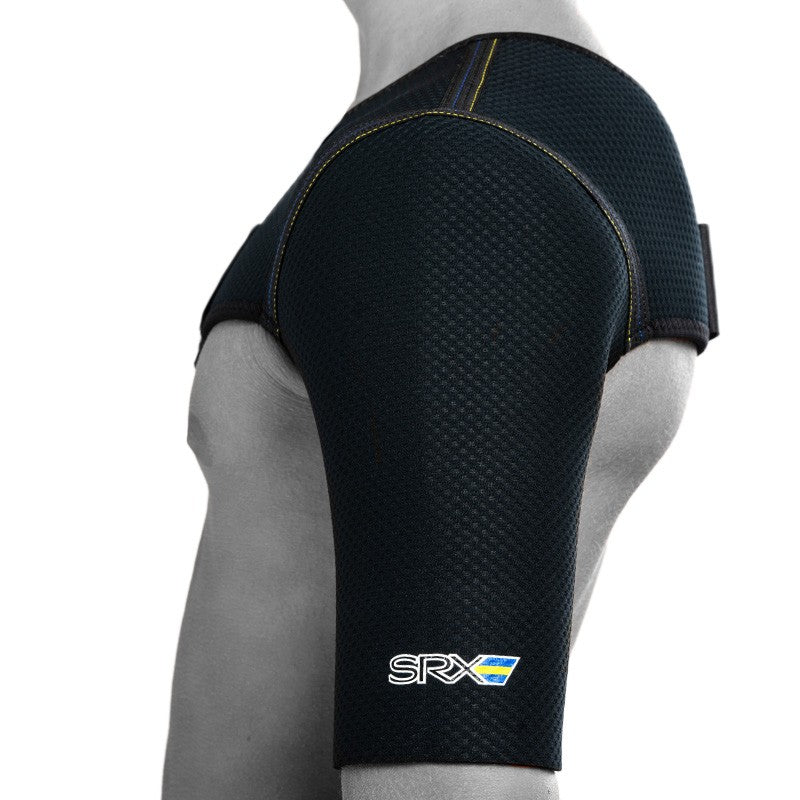
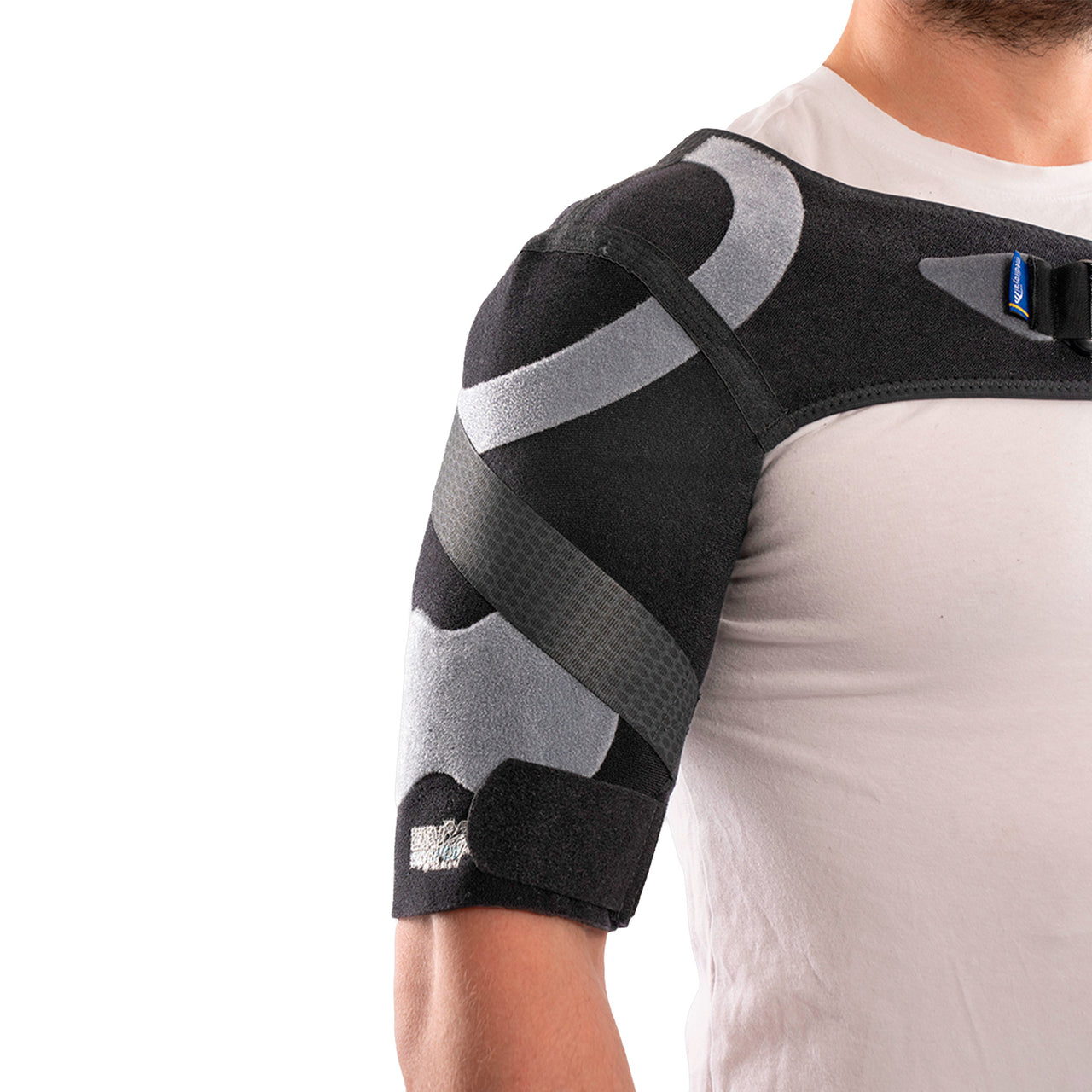
Bei leichter Überlastung reicht oft eine weiche Kompressionsbandage aus. Fühlt sich die Schulter unsicherer an, kann eine Bandage mit verstellbaren Riemen im Schulterbereich zusätzliche Stabilität im Alltag bieten.
Nach einer umfangreicheren Verletzung werden oft strukturiertere Hilfsmittel in der frühen Phase verwendet, bevor eine flexiblere Schulterbandage relevant wird, wenn es darum geht, zu alltäglichen Aktivitäten zurückzukehren.
Nutzen Sie die Schulterbandage sinnvoll
Frühzeitig kann die Bandage den Großteil des Tages getragen werden. Wenn das Unbehagen abnimmt, reicht es oft aus, sie beim Heben, Tragen oder bei Aktivitäten zu verwenden.
Die Bandage dient auch als Erinnerung, die Bewegungen ruhig und kontrolliert zu halten.
Passform und Komfort
Die Bandage sollte sicher sitzen, aber nicht zu eng sein und sich unterstützend während der Bewegung anfühlen. Es ist besser, eine einfachere Bandage in Kombination mit gezielten Übungen zu wählen, als eine zu steife Bandage, die alle Bewegungen einschränkt.
Entdecken Sie unser Sortiment an Schulterbandagen
Wenn Sie mehr über Symptome, Ursachen, Behandlung und wann es sinnvoll sein kann, medizinische Hilfe in Anspruch zu nehmen, erfahren möchten, empfehlen wir unseren Verletzungsratgeber zu Schulterproblemen.
Wenn Sie stattdessen Hilfe bei der Auswahl des richtigen Produkts basierend auf Ihren Beschwerden benötigen, können Sie sich jederzeit an unseren Physiotherapeuten wenden.