Daumensattelgelenkarthrose (Arthrose im Daumen)

Arthrose im Daumen, auch bekannt als Daumenarthrose oder CMC-Arthrose, ist der schrittweise Abbau des Knorpels im Grundgelenk des Daumens. Dies kann zu Schmerzen, Steifheit und einer verringerten Kraft in der Hand führen, was alltägliche Aufgaben wie das Öffnen einer Dose oder das Halten eines Milchpackungs erschwert.
Was ist Daumenarthrose?
Daumenarthrose ist eine Form der Arthrose, die das Grundgelenk des Daumens betrifft, das sogenannte CMC-Gelenk, das sich an der Basis des Daumens in der Nähe des Handgelenks befindet. Wenn der Gelenkknorpel im Gelenk abgebaut wird, verschlechtert sich die Gleifläche, die normalerweise eine reibungslose und schmerzfreie Bewegung des Gelenks ermöglicht.
Wenn der Knorpel dünner wird, erhöht sich die Belastung der Gelenkflächen. Dies kann zu Schmerzen, Steifheit und einer verringerten Kraft im Daumen führen. Da der Daumen in fast allen Greiffunktionen der Hand verwendet wird, können selbst kleine Veränderungen im Gelenk alltägliche Aktivitäten beeinträchtigen.
Häufige Ursachen & Risikofaktoren
Daumenarthrose entwickelt sich oft schrittweise über die Zeit und wird mit zunehmendem Alter häufiger. Der Zustand tritt bei Frauen häufiger auf als bei Männern.
Abnutzung des Gelenkknorpels kann durch natürlichen Alterungsprozess auftreten, aber das Risiko steigt, wenn der Daumen wiederholt belastet wird. Arbeiten oder Aktivitäten, die viel Daumen-Zeigefinger-Greifen oder drehende Bewegungen erfordern, können daher zur Entwicklung von Arthrose beitragen. Auch die Vererbung kann eine Rolle spielen, da einige Personen eine erhöhte Neigung haben, Arthrose in den Gelenken zu entwickeln.
Physiotherapeuten-Tipps bei Daumensattelgelenksarthrose
"Bei einer Daumensattelgelenksarthrose ist es wichtig, das Daumengrundgelenk zu entlasten und zu stabilisieren, um Schmerzen beim Greifen und bei Belastung zu reduzieren. Ich empfehle häufig eine Daumenbandage für den Alltag und bei Bedarf eine stabilere, schützende Bandage für Aktivitäten mit höherer Belastung."
Ida
Staatlich geprüfte Physiotherapeutin · Rehaboteket
Symptome
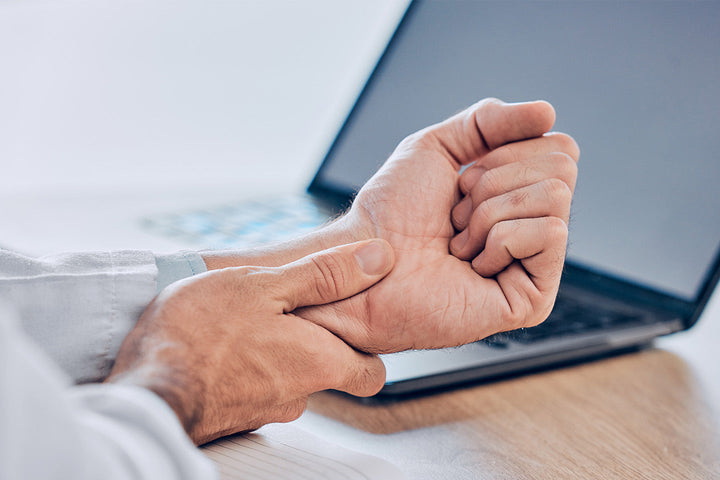
- Dumpfer, lokaler Schmerz im Daumen, oft an der Basis des Daumens
- Schmerzen bei Belastung, insbesondere bei Greif- oder Drehbewegungen
- Verminderte Greifkraft, insbesondere beim Daumen-Zeigefinger-Greifen
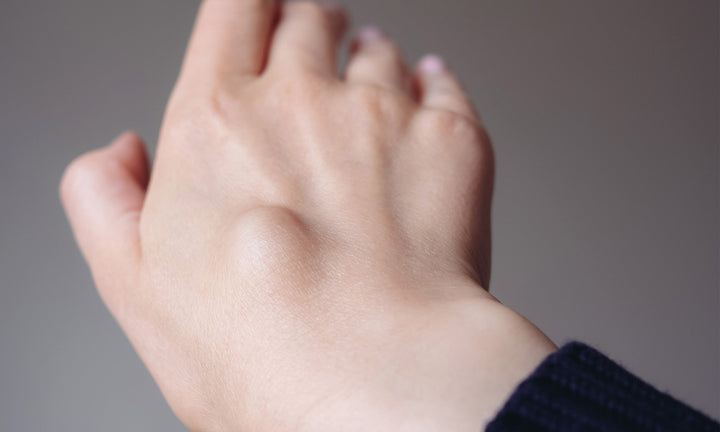
- Steifheit und Schwellung im Grundgelenk des Daumens
- Bei umfangreicherer Arthrose auch Schmerzen in Ruhe
Die Symptome der Daumenarthrose entwickeln sich oft schrittweise über viele Jahre, und es ist üblich, dass es Phasen gibt, in denen die Beschwerden weniger ausgeprägt sind.
Wann tut Daumenarthrose am meisten weh?
Die Schmerzen bei Daumenarthrose treten oft in Situationen auf, in denen das Grundgelenk des Daumens belastet oder gedreht wird.
Beim Greifen von Gegenständen
Das Halten eines Glases, eines Topfes oder einer Milchpackung kann Schmerzen an der Basis des Daumens hervorrufen.
Bei drehenden Bewegungen
Bewegungen wie das Öffnen von Dosen, das Drehen von Schlüsseln oder das Verwenden von Schraubverschlüssen belasten das CMC-Gelenk stark.
Bei wiederholten Handbewegungen
Arbeiten oder Aktivitäten, bei denen der Daumen häufig verwendet wird, können dazu führen, dass die Schmerzen allmählich zunehmen.
Nach längerer Benutzung der Hand
Die Schmerzen können nach einem Tag mit viel Handarbeit oder anderen Aktivitäten, die den Daumen belasten, zunehmen.
Wann sollten Sie ärztliche Hilfe suchen?
Suchen Sie ärztliche Hilfe, wenn die Schmerzen im Daumen anhaltend werden und Ihren Alltag beeinträchtigen, wenn Sie viel Kraft in der Hand verlieren oder wenn die Schwellung im Gelenk zunimmt. Auch wenn die Schmerzen trotz Entlastung und Selbstpflege schlimmer werden, sollte ärztliche Hilfe in Anspruch genommen werden.
Empfohlene Schutz- & Unterstützung
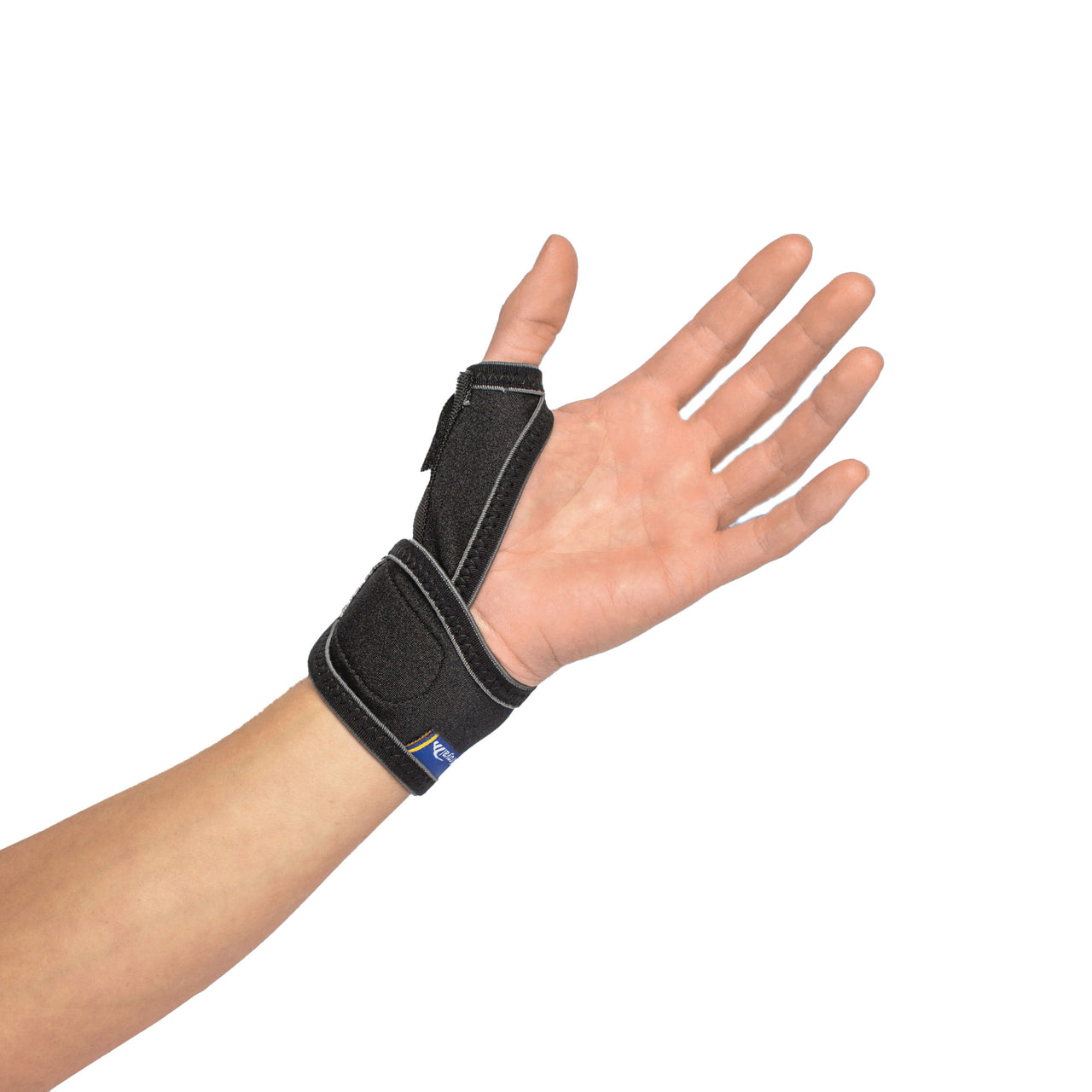
Bei Daumenarthrose kann der richtige Schutz und die richtige Entlastung dazu beitragen, Schmerzen zu reduzieren und die Funktion im Alltag und bei der Arbeit zu verbessern. Stabilisierende Daumenstützen können das Grundgelenk des Daumens entlasten und die Stabilität bei Aktivitäten erhöhen.
Auch ergonomische Hilfsmittel, die das Greifen erleichtern und die Belastung des Daumens reduzieren, können im Alltag einen großen Unterschied machen. Durch die Verringerung der Belastung des CMC-Gelenks können Schmerzen gelindert und die Funktion der Hand verbessert werden.
Alle Bandagen und Stützen ansehen, die bei Daumenarthrose entlasten können
Verwandte Verletzungen
Für weitere Informationen über die Hand und das Handgelenk können Sie im Verletzungsratgeber Hand & Handgelenk weiterlesen. Sie können auch zur Hauptseite des Verletzungsratgebers gehen, um über andere Verletzungen und Symptome zu lesen.
Der Verletzungsratgeber – schnelle Hilfe bei Schmerzen und Verletzungen
In unserem Verletzungsratgeber erhalten Sie klare und leicht verständliche Informationen über häufige Verletzungen, wie sie entstehen und welche Symptome typischerweise auftreten. Sie erhalten auch Empfehlungen, welche Bandagen und Orthesen Ihre Beschwerden lindern und Sie in Ihrer Rehabilitation unterstützen können. Alle Informationen basieren auf dem Fachwissen unserer lizenzierten Physiotherapeutin.
Finden Sie die richtigen Bandagen und Orthesen für Ihre Bedürfnisse
Es gibt mehrere Möglichkeiten, das richtige Produkt auf unserer Website zu finden. Für eine persönlichere Auswahl können Sie unsere Filter nutzen und nach Verletzung, Körperteil oder Sport sortieren. Sie können auch Hilfe von unserem AI-Assistenten Eir erhalten, der auf alle Inhalte unserer Website trainiert ist und Ihnen bei Produktempfehlungen, Passformfragen und bestellbezogenen Anliegen – rund um die Uhr – helfen kann. Wenn Sie lieber direkt mit unserem staatlich annerkannten Physiotherapeuten sprechen möchten, können Sie uns per E-Mail für persönliche Beratung und Unterstützung bei der Produktauswahl kontaktieren.